Episode 5
Pain In My Pelvis
If you have been living with endometriosis or chronic pelvic pain and feel like you are somehow trapped between what your body is doing and what the healthcare system is offering, this episode will help you understand why, and what else is possible.
Whether you are living with endometriosis, vulvodynia, bladder pain syndrome or another form of chronic pelvic pain, working in women's health, or navigating the long gap between diagnosis and feeling genuinely supported, this episode offers both the science and the lived experience to help things shift.
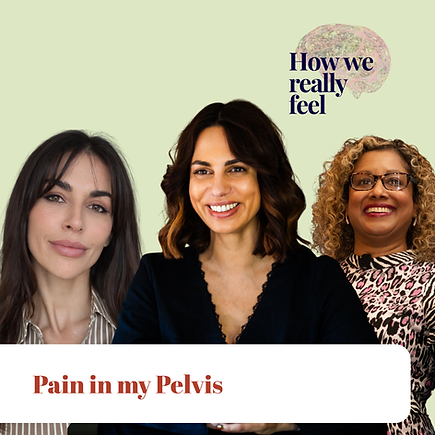
Dr Sula is joined by Carla Cressy, founder of The Endometriosis Foundation and patient advocate who was finally diagnosed with severe endometriosis at 25 after a decade of dismissed symptoms, and Sheren Gaulbert, pain and trauma therapist, cognitive hypnotherapist and trustee of the Vulval Pain Society, who spent nearly ten years in debilitating vulvodynia pain before finding her own way through, and then dedicating her career to understanding why it worked. Both guests know this territory from the inside. Carla spent years crawling across floors in agony while being told nothing was wrong, and ultimately required a hysterectomy, bladder reconstruction and stoma after endometriosis was left to progress unchecked. Sheren spent years in bed, left university, was told extensive bed rest was her future, and then found her way out through a route she didn't expect and couldn't quite explain at the time. This episode sits at the intersection of endometriosis, chronic pelvic pain and mental health in a way that is honest, scientifically grounded and genuinely hopeful.

About Sheren Gaulbert
Sheren Gaulbert is a clinical educator and specialist pain therapist whose breakthrough from chronic pain led her to help people reclaim their lives and to ensure clinicians provide informed, evidence-based care. Her tailored 1-2-1 programs integrate psychological, somatic, trauma-release, mind-body approaches (including EMDR), and cognitive hypnotherapy, helping people more comfortably do the things that bring them joy. Sheren coaches multidisciplinary clinicians in ethical, pain science–based, trauma-informed collaborative care, therapeutic language, and addressing burnout, imposter syndrome, and other clinical challenges. She is a Trustee of the Vulval Pain Society, hosting their online and in-person events, and is a seasoned speaker


About Carla Cressey
Carla Cressy, OBE, is the Founder and Chief Executive Officer of The Endometriosis Foundation, one of the UK’s leading charities supporting those affected by endometriosis and chronic gynaecological conditions.
Following her own experiences with delayed diagnosis and the wider impact of living with endometriosis, Carla founded the charity with a mission to improve awareness, education, support and access to compassionate, evidence-based care. Under her leadership, the organisation has grown into a national voice within women’s health, delivering free nurse-led support services, workplace education programmes, policy advocacy and community initiatives across the UK.
Carla works closely with healthcare professionals, researchers, employers and policymakers to help drive earlier diagnosis, improve patient experiences and challenge the stigma surrounding menstrual and pelvic health. She is also involved in national conversations surrounding women’s health policy and education.
In 2026, Carla was awarded an OBE in recognition of her services to women’s health and endometriosis advocacy.
What we explore
-
The pain of endometriosis and chronic pelvic conditions is not just physical. The nervous system, stress hormones and emotional suppression are all actively shaping the experience of pain in ways that most clinical settings still don't address
-
Being dismissed, misdiagnosed or treated as a number rather than a person isn't just frustrating, it has a measurable neurobiological impact that can actively worsen chronic pelvic pain and mental health
-
The internal predictions your brain makes about pain (based on past experience, fear and worst-case thinking) can trigger a physiological response before you've even sat down in the chair you're dreading
-
Support groups, community and feeling genuinely seen are not soft extras in chronic illness recovery, they are part of the neurobiological conditions that allow healing to happen
-
Cognitive hypnotherapy works not by putting people into a trance but by identifying and interrupting the unconscious patterns, predictions and held tensions that keep pain cycling
.png)
You'll learn:
-
The body's stress response (adrenaline, cortisol, pelvic floor tension) doesn't just accompany chronic pelvic pain, it actively drives it, which means that anything reducing that threat response is not complementary to treatment, it is treatment
-
Your brain is predicting pain before it arrives, based on memories, past dismissals and worst-case thinking and those predictions have real physiological consequences that cognitive hypnotherapy and pain psychology can specifically target and interrupt
-
Being seen, heard and connected, whether by a clinician, a community or simply one person who gets it, is not a nice extra in chronic illness recovery, it changes the neurobiological conditions in which healing becomes possible
Links to Organisations & Support
Academic Research discussed:
-
Central sensitization in urogynecological chronic pelvic pain: a systematic literature review
-
Fear-avoidance and its consequences in chronic musculoskeletal pain: a state of the art
-
Help-seeking experiences and intimate partner support in vulvodynia: A qualitative exploration
-
Prefrontal engrams of long-term fear memory perpetuate pain perception
-
Psychological Processing in Chronic Pain: A Neural Systems Approach
-
Stress, pain, anxiety, and depression in endometriosis–Targeting glial activation and inflammation
-
Stress-induced hyperalgesia instead of analgesia in patients with chronic musculoskeletal pain
-
The multi-dimensional stigma of chronic pain: A narrative review
Podcast Transcript
DROPPED! (00:00.366) I'm really delighted to have you both here today, if you wouldn't mind by starting to introduce yourself, starting with you, Carla. So I'm Carla Cressy. I'm a patient advocate and the founder of the Endometriosis Foundation, which is a charity that supports and educates people around endometriosis. Thanks Carla. Sheren. I'm Sheren Gaulbert. I'm a pain and trauma therapist and I'm a trustee of the Vilewell Pain Society. I'm also a clinician coach. Amazing. It's wonderful to have you both here. what's really special about this episode is that you've both got your own lived experience of pelvic pain and lots of other things besides. So would it be all right if we just start off by hearing a little bit about one of the moments that kind of typifies or gives a good idea of what it's been like to be you experiencing pelvic pain? So one kind of standout moment for me, and I... I remember it clear as day as well, because I remember thinking like, how are these people, professionals, still trying to tell me that nothing's wrong? And I remember I was probably day two in bed. I couldn't kind of leave the house. And I just had such severe pelvic pain that would kind of radiate from my back and like bladder spasms. And it was just awful. And I just remember going to get up out of bed and I couldn't physically kind of straighten up. And then I just remember, I remember crawling from my bed to the floor on my hands and knees and having to crawl across the floor and down just like six flights of steps, like six steps, crawling down the steps to go to the bathroom and then trying to get back up to get back up to my bed. And I couldn't physically stand up and straighten my body. And that to me is one of the kind of moments that just stands out to me that And then to actually go to the toilet, the pain that I experienced with that, and then kind of having to try and get back up to my bedroom, physically just completely unable. That's definitely a standout moment for me when I knew, well, I knew anyway that something wasn't right, but I was still being told at that time, there's nothing wrong and you're going to grow out of it. So that was, that's definitely something that kind of sticks with me that moment. old were you around that time? 21. DROPPED! (02:26.946) And what do you think it is about that particular moment? Because there's some things that you said there that really resonate as well when I'm talking to people experiencing these sorts of issues around this sense of it can be this severe and I can still be being told that there's nothing wrong. Do you think that's one of the elements that makes that in particular stand out? Yeah, I think so. I mean, I always had pain, but I'd always kind of have these waves of pain and then I'd... pass out. So was always known for having pain and passing out. I think this particular moment I hadn't yet passed out. So I was just kind of feeling this pain. And I just remember I was by myself as well. So it was a harder. And I just remember having to kind of navigate to the the toilet to the bathroom and thinking I actually cannot live like this. I cannot go on like this. And that frustration and kind of anger towards my medical team and that time was like level 100. Cause I knew, you know, this isn't, this is not okay. Thank you for sharing a bit. And we're going to kind of explore your experience more as well, the journey and yeah, battling with the healthcare system a little bit and give more context to that. But Sheren, I'd love to hear from you as well. Kind of similar actually. So I had unprovoked valvodinia and that meant pain pretty much all the time in the vulval area. And it's funny, isn't it? Because I forget how bad it was. And I came across this diary I'd kept and it was black. It was a black diary. I opened it up full of red scrawl and it was, can't go on like this. Why is this happening again? And I was rating the pain, you know, nines and tens. And this just went on and on and on. And It helped me sort of remember, because I think I was blocking it out, of the years I spent in bed. So there were no answers at that point. I'd had pain for years and I'd been told, extensive bed rest, you probably have to stop working or maybe do something menial part time. And I railed against that. But every time I tried to get back to work, I would pass out from the pain. DROPPED! (04:47.082) So similar sort of thing. And I'd end up back at home. And so I had years at home in bed, not being able to do very much, which of course set up other problems like sciatica, that whole thing of trying to get out of bed. And this was sciatica, a knock-on impact of me just being in bed, not able to move around very much and crawling on my bottom down the stairs and then... trying to get from room to room with a walking stick. Absolutely atrocious and feeling hopeless. I was young, I was in my twenties, that I had to leave university, a law degree and everything had come to a standstill. No answers. Absolute desperation, relying on other people. This was not the time of online shopping. So relying on other people to do bits of shopping for me. Yeah, I'd forgotten that. And I think that diary really helped me remember just the monotony of every day and the hours spent in bed. It's awful to think about, you know, those scenes that you've both shared actually paint such a picture of the degree of pain, you know, to the point that your body can't take it. So you're safe from it in a sense by passing out. But when you're not at that point, you're just stuck with the pain, being trapped and to the point that you're impacted in your... just even ability to move your body, right? Like crawling on the floor, having to move on your bum. And then that wider context of, this is your reality that, you know, that's a really awful place to be. I wanna explore the journey a little bit more, but I guess just to give the contrast for listeners at this point, Carla, like how things change for you now, where are things for you presently? Well, I finally got diagnosed with endometriosis, which was very obvious, even I think I was 15 when I first saw a gynaecologist with all the common symptoms. But my diagnosis came around when I was 25 and it actually came around kind of by accident. But my again, pelvic pain was so severe on this particular day that DROPPED! (07:04.23) I just so happened to be visiting my family. So my mum kind of witnessed this. I wasn't able to get up the stairs. I was just completely huddled in a ball in the dining room. And she managed to get me in front of the GP via emergency. They sent me straight to the hospital and straight into surgery and removed my appendix because they mistook that pain that I was in quite regularly for appendicitis. And then kind of two, three days into this hospital stay, after removing my appendix, they realized actually, I'm not getting any better. Removing the appendix made no difference to my situation. And that's when they then went in and found it was endometriosis and it progressed so far that it had gone to a fail basically. I was kind of at the end of the line with it. had frozen pelvis. It kind of destroyed my bowel, my bladder, all my reproductive organs. So where I am now, nine, eight years later, I'm doing well. I'm in the menopause. which isn't so great, but I did have to go through quite extensive operations. I had to have bladder reconstruction, bowel reconstruction, had a stoma for a while, total hysterectomy, so kind of everything had to be come out. And that was really, I think, hard for me, mainly because I was in so much pain and it wasn't that I... just kind of got on with it. You know, I was very vocal. was at the GP every period, which were also, I had PCOS, so they were very irregular. So I was there every two weeks, you know, complaining of such awful pain. I also had a type of endometriosis that affected my ovaries. So I'd regularly have these really horrible cysts that would burst that would cause me to end up in the hospital with infection. And so I was very persistent and so was my family. So then to finally get that diagnosis, then have to go through all of those. really invasive surgeries, mean two of them were open surgeries as well, so they're really difficult to kind of like go through in that kind of time. So yeah, I mean I'm doing well but it's just a shame that it took for it to go that far to be kind of dismissed so much when you're in absolute agony and you know something's not right to then have to kind of go through that. Yeah, so much to go through and I think you were talking about this recently in an event that we did together maybe that the DROPPED! (09:21.806) degree of pain that medics equate with appendicitis, making them believe then that this is what you were experiencing kind of almost also reflects just how painful it is exactly. Yeah. Sheren, what about you? So I had almost 10 years of provoked vulvodynia before I had a breakthrough. I didn't know why I got to have the breakthrough because in that period of time I trialed various treatments so diets and supplements, exercise, physio, the whole kind of load of things kind of thrown at it and nothing was working and I tried self-hypnosis quite early on didn't do anything and then around about the 10 year mark almost 10 years a friend said you know you should try self-hypnosis and I thought I've tried that before and I was in this bookshop and this book of self-hypnosis scripts was winking at me and I thought, well, what's the worst that can happen? I can probably put on a funny voice and record one of these. But I didn't pick one that was to do with pain. I just kind of read through one and thought, don't know, there's something that I'm connecting with here. I'll record this in a funny voice on a cassette tape. And within a week I was up and out of the house on my own. Wow. here's the thing, I didn't recognise that I'd done that and I was talking to a friend and she went, sorry, hold on, back up. Did you just say you left the house on your own? How did you do that? And I didn't want to believe it was a self-hypnosis, I didn't think it was credible. And so I sort of ignored that for ages, but continued listening to this tape, to this recording. And it wasn't that the pain was gone, but something was shifting. that meant that I could move and that I was really focused on what do I want to do with my life. And I got into this mindset of I will find a way out of this and when I do, I will find out why and then try and help other people. And I did get better. I retrained as a cognitive hypnotherapist, looked at pain science education, wanted to really get into that so trained with NOI and... DROPPED! (11:38.914) the pub C on TV can did as many courses as I could and got mentored regular mentoring to understand why I'd got better and the complexity of all of that and then I started out generally treating and people with anxiety stress confidence I've been a confidence coach in the past it's something I'd done for a long time and people just kept saying you need to help people with pain. And I knew they were right, but I still wanted more answers, really wanted to understand the biology of what was going on and get my head around it as to why it was that self-hypnosis, a random script that seemed very random worked. And then once the pieces started fitting together, I realized that this is quite complex. There's a lot going on here. So my life now, no pain. perfectly normal life, shall we say. I work full time as splitting my time between working with people who have persisting pain. I've specialised in pelvic pain, so I see more people with pelvic pain, but I also see people with fibromyalgia, migraines, but most of the people that come to see me have pelvic pain, male and female. And the rest of my time is working with clinicians and really getting them to understand what is happening in the body and looking at the treatment choices as well they're making for their patients or clients so that whatever decision they make they are tailoring that to the person that they're not just treating a body part they are looking at the complex interplay of emotions you know the psychological aspects social aspects and again what's going on aside so they know why it is they are making a particular treatment choice in collaboration with their patients before they even suggest it and making sure that it's meaningful to the person as well because I remember part of my journey I saw a psychosexual counsellor because I was told to. Sex was not my priority at that point. I just wanted to be able to move, sit down, walk. Sex was not a priority. I did have DROPPED! (14:00.91) This is going to be shocking. A GP say to me, oh, just get married and have kids and you'll be fine. how's that working with, you know, Valvodinia? Yeah, it is shocking. And Carla, I wonder if you could share as well your insights as well from people seeking support from the charity in how they're treated when they're reporting their pain. I think, like you said, it's at the moment and especially 10 years ago when I was diagnosed, everything was very generalised and to some degree it still is. So it's really difficult to find and also treatment is still quite limited. There's a lot more available and more to choose from now. But when I was diagnosed, it was kind of, you know, this hormone pill, that hormone pill or an injection for menopausal surgery. That was it. We didn't really have much to go from. I think everyone is so different and especially when it comes to endometriosis, for example, we are quite hands on with people's care pathways and referrals and that's because everyone is so different. So it might be that someone has pelvic pain, but they also might have bowel involvement or they might have kind of fertility concerns. And so the treatment outcomes for every individual person can be completely different or the opposite to someone else. So I think that's so important to really tailor that and understand these conditions more and really involve patient voices too. because again, so different. know that I spoke to you sometime last year because we had a group of people that we support under a specific trust that were invited along to a pain management kind of therapy type clinic. And we have people there who, kind of getting used to having a stoma or preparing for quite a major operation or overcoming a infertility diagnosis that was unexpected and they're sat in a group with somebody with a broken arm. It just didn't make any sense and a lot of the wording was kind of like, this is all in your head, this isn't real, but actually for these people it's very real and it was just the wrong therapy entirely and then we had to kind of help. DROPPED! (16:19.31) then try to put that right and explain to the trust why this didn't work and the feedback we were getting and for some people it was actually really triggering and these things, it can be really damaging to feel I guess dismissed when treatments are very generalised and it still happens, I mean it happened to me a few weeks ago at the menopause clinic so it still happens and I think it's just you know being seen as an individual and not a number makes all the difference. What is happening, Sheren, kind of on that neurobiological level when you're feeling unseen or invalidated in your pain? Let's talk about adrenaline and cortisol. Yeah. Yeah, because you're going to be angry, frustrated, or you flop, you feel hopeless or helpless. And if we're thinking, right, we've not been seen, we've probably already got a level of adrenaline or cortisol running through us. So these are inflammatory biochemicals. And as soon as adrenaline hits the system, our body, the pelvic floor, the superficial pelvic floor, the first muscles to tense up, followed by the jaw. Now this is not great for pelvic pain. And if we are not seen, more of the same can continue. You can imagine the tension. around that whole area and that can impact people in different ways. It can make people completely just give up, which means perhaps more adrenaline. It can stop them socializing, seeing their friends, reducing the amount of serotonin in their system. So things that can be really helpful like serotonin, oxytocin, endorphins, know, dopamine in certain quantities. suddenly not there anymore because we're not living our lives. So not to feel heard, yes anger and if we don't feel like we have a direction, more anger, more frustration, more adrenaline. This just keeps on playing in a loop. This is a cycle that then where are we meant to turn to get ourselves out of that? But there are some wonderful clinicians out there. When I DROPPED! (18:38.574) had my symptoms. So back in late 90s, it took a year for me to get a diagnosis. That's pretty good. We're in 2025. Athena Louncy at the University of Stirling has just published her paper on the help seeking behaviours of people with vulval pain. It takes on average one to two years for diagnosis. And those are just the people who get a diagnosis because of those repeated visits to the GP surgery where they are not heard. and they're just given antidepressants. Sure, first line treatment for valvodinia can be tricyclics, they can be quite effective, but it's part of the pitch. We still need to work out what else we need. We need a multidisciplinary approach and that is going to be different jigsaw therapies for each person. Most people give up and that's not good enough. It's keeping that cycle going and who knows what happens to those people who don't get a diagnosis. It's the most natural thing in the world, right, to withdraw from the healthcare system is if every time you present, you're being told that your experience isn't what you think it is or it is, but there's not much that we can do or try this thing that doesn't seem that relevant. It makes a lot of sense, but then at the same time, that puts people in a bind because then they're out of the healthcare system. reaching for options that maybe it feels like there aren't any or they could, as you said in your story, they're trying to reach for everything and pour everything on. And there's a lot of charlatans out there. Yeah. And when you are desperate, you'll try anything. And my goodness, I can't think of the amount of money I must have spent on treatments that were... absolute BS. I've done some weird and wonderful things as well. Because you're just hoping that something's going to work, but I bet some people just give up and think this is it. This is my lot. Once I got better, about a year after I got better, I went to a support group to, I wanted to hear other people's experiences. And it was a room full of people crying. DROPPED! (20:53.55) And you feel worse. And guess what? I'd been, you know, free of pain for about a year, a couple of days later. Guess what was back? My vulva, you? Because guess what? The neural pathway is still there. And I, at that point, didn't know about having, and I kind of talked to clinicians about having a sense of your physical space and a boundary around you so that you're holding space with compassion, but you're not stepping into someone else's space. And of course, having been there, It's very easy to step into someone's space and go, yeah, I remember that. I know what that's like. And it's not my space to do that. That's something we come across as having set up a charity because our main kind of focus obviously is education but support because there just was nothing there. And I remember before I even kind of starting a charity was even a thought. I attended a support group in a local hospital. And I felt worse leaving that group than I did when I turned up. And that always stuck with me and I've attended others and again, similar situation and experience. So now through the charity with ours, we will always hold a support group with a clinician present. We'll always kind of hold space or make time for people that need it more than others. And I think that's so important because if there's nobody there that's... qualified or equipped to help you manage those feelings before you leave that door. Who knows how somebody's feeling, what they might do or go on to, you know, it worries me so much. And you have such a valid point there, because that's always been something that I've been quite, you know, it worries me to know that people might leave feeling worse than what they did when they arrived. think this is really important. First of all, support groups are important. you know, it gives people a sense of I'm not alone. It gives them the opportunity to voice what's so important may not have been heard and feeling held is so important. also, yeah, and also having a clinician there, I think is important. And also to make sure is action orientated that everyone leaves with some kind of direction they can go in. Otherwise, it's just venting and. DROPPED! (23:11.69) that can just amplify things. That's more adrenaline, more cortisol that can keep adrenaline in the system for longer, more tension. And we just need to be mindful of how we're running these. you know, in support groups, you don't see the people who've got better in support groups on online forums. So when I work with people, I want to know where they're hanging out and how that's run. Because if it's just the worst case, stories, then that's not serving them. They need to hear recovery stories or, you know, people managing and living their lives better, those stories, and to have some sort of direction that they can go in what to explore next. Because it's still finding that is again being tailored, it's finding the different types of routes and approaches that fit together that can work for that individual person. We need curiosity in the support group space. Yeah, it's very interesting to recognise the social contagion element of things when you're around a load of people who are suffering in similar and potentially worse ways than you are sometimes. How that can then inform those fearful predictions about what's going to happen for you then. We're all trapped here. We're all helpless and actually potentially could get worse than I thought. I'd love to explore, Sheren, a little bit about how those elements of things can actually influence pain. So predicting a worst case scenario is one of those primary drivers of persisting pain. we are, you know, we do that unconsciously. We are obviously predicting the future all the time. I say obviously, maybe it's not that obvious, but it's done for us automatically. So... We're taking in what we're seeing in the environment around us, what we're hearing, what we're feeling, not just internally, but our skin, temperature, all of that information being processed automatically. And then we know how to be in the world. so unconsciously there's this prediction going on, if I do this and this is going to happen, that happens. DROPPED! (25:37.26) you know, without us having to think about it. But a lot of these things were learnt behaviours. So if we look at a child learning how to walk for the first time, they're going to be sort of toddling along and falling on their bottom quite a bit. But most of us as adults, we can walk, we can do that without thinking. But we did have to learn how to do it in the first place. We're sort of... fairly consciously incompetent to start off with, and now we're competent, we don't have to think about it. So all these kind of micro predictions are happening anyway, and then when it comes to pain, if the predictions are, well, I've sat in a chair in a lecture hall for a length of time before, and it really hurt, and I know those chairs are not going to be forgiving. If you're then going into that lecture hall or wherever it is, well, maybe it's a wedding. or sitting around with friends having dinner and you think all you're thinking about is I need to somehow sit on that bench in that chair for X amount of time and somehow put a grin on my face and be okay. Maybe I won't go. I was just about to say that I used to just pull out even last minute sometimes because I'd really want to go. But then just the smallest things that people that wouldn't experience this just wouldn't even think of. would actually put me off going. Your world shrinks. Yeah, what sorts of things would be? I remember I had like this, it's almost like a yoga pillow thing because I generally sometimes I couldn't sit down. And like just literally it's something as simple as seating. I was with friends and we'd walk past a row of restaurants and then they had metal chairs, but absolutely not. And just carry on walking because I'd know that it's just not, I would literally be there in pain. I would look for comfort. Maybe that's because I'm No, not at all. It's the most natural thing. actually even the question of seating, something that lots of people wouldn't even think about until they experience this sort of pain, but something that comes up a lot with the people that I work with that have pelvic pain of all different origins, whether it's endometriosis, bladder pain syndrome, vulvodynia. yeah, having to A, kind of make these predictions and B, then make these DROPPED! (27:58.828) adaptations, bringing a cushion or something like that. So in one way, our brain's making predictions based on its best guess of what's happened before and how that then informs what we can expect going forward. And then that can physically change our pain experiences. Is that right? Yes, it can. Because again, if we're already predicting that this is may not go very well, then we've got that adrenaline, we've got the tension there already. And then We go and sit down, whether we've got an adaptation, we've got a doughnut cushion or whatever it is or not, we may hold ourselves differently because we don't want to kind of connect too much with the chair. And then we're causing other kind of issues if we're kind of not sitting okay. We may be thinking, what are other people thinking of us? And you can imagine what's happening internally is more of that adrenaline, other people may notice. Also, it's the pelvic area and we don't, you know, there's a taboo talking about the vulva or things like this. know, my mum didn't even know the word vulva existed until a few years ago. Same. I'm not sure. Same. Yeah. She was like, I've never heard of this vulva. What is it? Well, you've got one. Yeah. The educator just wasn't there. it really wasn't there. So. I think the worries also is you've got this prediction of what other people may think, what they may think of you. And if you pull out what they may think of you, I'm that flaky friend. Yeah. And it's all built in this pressure, which interacts with these, these different pain processes, in a lot of different ways. Right. I remember reading a paper around, processes involving like the way that our brain stores memories as well. So, you the memory of pain is physically embedded and therefore can elicit pain in the present just by eliciting like a memory of being in pain. And then if we add to that other things that we know feed into pain, like pressure, shame, all of these difficult emotions, which, you know, change these biochemicals that you mentioned, Sheren, then that can make pain more likely and we kind of end up in this cycle of either need to withdraw and then the world feeling. DROPPED! (30:16.142) more unsafe and smaller or need to engage with it but it feeling like you're on a roller coaster ride and kind of bracing yourself which is also changing your physiology. And it's that potential threat response that we're having and what we really need is a feeling of safety around these and again that looks different for each person going from this threat response over to safety. But as long as we're over here, nothing's changing. And in fact, things may just be worsening because it's just feeding into that cycle, you know, life becoming limited and yeah, that helplessness and hopelessness again. Carla, you know, thinking about that, because in endometriosis, there are so many threats, it can actually feel like quite a hopeless diagnosis. going to say with endometriosis, it can be very unpredictable. so then you'll have, well, I certainly had that kind of constant fear and anxiety and I would some mornings wake up in the morning, be absolutely fine, get myself ready, catch up with friends, leave the house on my way out, have lunch and then all of a sudden a pain attack and I'm bent over throwing up in a restaurant, passing out in a restaurant in an ambulance from the restaurant to a hospital, I don't even know where it is. And that unpredictability for me was one of the scariest things I think, because I would just go out and just... try and have a nice day and end up in a hospital in Timbuktu and trying to call my mom and they're trying to explain why and nobody knowing kind of what's causing or what's going on. So that caused a lot of anxiety for me. Absolutely. Cause you know, some of the things that we've not fully explored, but been moving towards in this conversation already is, you know, some of the things that can help us in processing. these experiences in mitigating pain, things like re-engaging and finding safety in the world, but that unpredictability can make it hard. How do you handle that, Sheren, when you work with people? We have a number of reactive strategies that can be used and proactive. So proactive strategies are all about building safety in the body. So that could be for some people, certain types of breathing exercises, no two people really like. So we're discovering what DROPPED! (32:32.078) breathing exercises might work for some people, breathing's out. Because focusing on breathing actually makes things worse. Getting them really tuned into pleasant sensations in their body, because they exist too. So that sense of the embodied self and tuning into senses that perhaps we draw our focus away from when there's pain, because pain really draws the attention and... getting them perhaps to be more extraceptively mindful of the environment around them and slowing things down that way. Or one lovely exercise is end of the day, reflecting back on the day and picking a moment that gave a sense of joy, small, small joys, know, we're not going to, everyday things aren't going to be hugely meaningful, but something small that they can tune into that might notice, yeah, I did get a little bit of warmth in my chest. or bigger moments, know, moments of awe that weren't connected to another person. So this is about self-efficacy and not depending on another person to give us those good feelings. And we might be just a place that's stunning and focusing on what did you notice in your body in that moment? And then finding an association. So it might be a smell. that we associate with that and then we can allow them to kind of bring that in each day or it might be a movement and somatic work can be really powerful because one of the things we talked about adrenaline dripping in there's that kind of tension response and when we feel like we've lost our sense of agency that there is no direction for us we're kind of we've got that adrenaline state where there's that state of hyper arousal in the nervous system At the same time, there's a bit of a split because there's no action we can take. know, adrenaline's there for us to fight or run. And if we can't do either, we might then flop or freeze. And so we've then got hypo arousal happening at the same time. We want to kind of open up what we call this window of tolerance by adding in resources that help the person feel safe in their body. sure, then, you know, mind, body, they're interlinked. DROPPED! (34:55.662) but really tuning into what that's like. So again, that will look different for each person, but building that safety first, then looking at, okay, how can we bring in reactive strategies? And some of them will be using the safety strategies to break the cycle of feeling under threat, feeling like this is just happening to me. And when you say reactive strategies, you mean, so what you've just been talking about is like building these broad elements in life to bring more of a sense of safety, when there's that foundation there, we can look at interrupting the reactive strategies being when you're in pain, like how do we relate differently or kind of work with that? that what you meant? That's exactly it. And if we go to movement, then we're kind of taking the conscious thought out of it, because ultimately, our rational mind is not playing the biggest part in this, this is kind of automatic. So again, coming up with movement strategies that feel okay. So they can be very, very specific to the person. So getting them tuned into what, how's your body reacting when what's the emotion that's coming up? We don't have to label it, but they might say, well, I noticed that I'm sort of holding my breath a bit, or I'm clenching my fists. And then we come up with a movement that is kind of moving them from that clenched fists or the kind of shortness of breath to. they'd like to be instead and they can come up with that and then we kind of get them to practice that coming out of that semantically as a movement as I say that will be different for each person but it's again giving them that sense of agency the movement that isn't there and they get that back in that moment as an interrupt yeah it's really interesting this is you know a lot of the the stuff that I do with my clients and it's lovely to hear how you approach it and seeing the concordance there. And it reminds me of a session that I had with somebody where it was somebody with endometriosis with extreme pain. And I was asking, because they'd just been in a lot of pain. So was asking, tell me a bit about what you're experiencing now, what the pain's like now. And they were telling me the pain's not really there now. And I was like, OK, excellent. Talking about those strategies actually that you're talking about. DROPPED! (37:14.742) Sheren in terms of let's build some safety associations then if the pain's not there now, how can we relate a bit more, well safely essentially with the body. But what I was surprised by was there was big resistance because it was like, no, the pain's not there. I don't feel my body at all. I don't want to do this. So I was like, interesting. So are you telling me you don't feel your body at all? And they, you know, very clear can't feel any sensation. So was like, so you're either completely in pain or you don't feel your body at all. And I guess that also corresponds with this kind of high adrenaline state or completely crash out deactivated state where you're not connected with your body. And what we ended up doing was saying, okay, well, are there moments that you ever do feel your body when you're not in pain? And that helped bring down the resistance because they could identify a moment fairly regularly when they could feel their body and they weren't in pain. And we just expanded on that, which actually started changing so much. And I was saying experimentally, I wonder if just having this increased awareness now of your body in this moment that you already had, but you've got the increased awareness of this being a safe thing. I wonder what that... that starts to shift things down the line with some of these pain experiences and being able to experience your body outside of pain. We're still in the process, so we'll see, but it makes a lot of sense. And Carla, I'm really interested in your thoughts on these processes. Yeah, I mean, don't know if there's a link there, but I remember going for a stage, I hated my body. I just felt like it completely failed me. And I think a lot of that was because of how the infertility concept affected me. And I would just suppress everything and get really busy. Stupid. was just doing stupid things. Like I got on a flight to America when my surgeon told me don't to do a talk on endometriosis. And I got there and I just collapsed and ended up missing the talk and being fed painkillers just to get through the journey home. I was just trying to know like, yeah. And I think, DROPPED! (39:28.49) It was when I kind of kept that up for about three years, but I was also building the charity. So I was doing some really incredible things and taking it to parliament. And I went to parliament still with staples across my stomach, just because I had to be there and do it. But actually I should have just been in bed. But I was just kind of like, no, this has stopped me for so long, not anymore. But actually I was in agony. And then I think... Eventually then when I had my last operation and the pain had actually gone, just, that's when I started getting panic attacks, chronic anxiety. Couldn't even, I didn't even want to leave the house. The postman would put a letter through the door and I'd have a panic attack. didn't even know why. So all these things just kind of tumbled out of me, I think. So I think for me kind of suppressing it all that time. and acting like, it's just a physical thing. It's not like trying to disconnect the two to protect me. Just caught up with me in the end. Yeah. It's interesting your use of the word stupid there, doing stupid things, but actually it's the most natural, understandable thing. Really, it makes a lot of sense for a lot of people because if you can be distracted with that busyness, why would you not do it? There is also a suppressing effect, right? A pain suppressing effect of adrenaline. So, you know, that can be when people are able to be very functional and hold down work and they can actually get through a working day where maybe there is pain in the background or maybe there isn't for some people, but then it's at the end of the evening or week when it all It takes two weeks to recover. Absolutely, yeah. Sheren, what are your thoughts about this role of emotional suppression in pain processes? Yeah, it makes sense. this kind of toggling between being in your body when it's in pain and then it's not safe to be there. So you kind of dissociate. And of course, if someone's in pain, why would we want to feel pleasure at the same time? Because if adrenaline is in our body telling us there's a potentially a predator, you need to fight it or run away. Well, the last thing you need is some feel good. DROPPED! (41:38.784) stuff happening at the same time that's not going to save that wouldn't have saved our ancestors lives so we've got these very natural processes that keep us from and unless we are mindful about it we kind of lose the ability to connect meaningfully with the pleasant sensations it's not that they're not there it just feels like it's not safe to do that so we can toggle between being in our body and then disassociating from it perfectly natural, makes sense. But over time, as you said Carla, when you then are in the body, you may then notice other stuff that was there all along that you've been suppressing. So anxiety may then come up to the surface, it may come seemingly out of the blue, but it was always there and we were just being overprotective and just won't be in my body. Yeah. that make sense? Yeah, it makes total sense. Just thinking a little bit about, you know, these things that give us a sense of safety. So if we can relate to our body when it feels slightly more pleasurable or comfortable and find opportunities for that, that's one element that can build that foundation. You both also mentioned the role of community or... feeling a sense of belonging and being seen is such a huge part. What feedback do you get in the charity there from that aspect of things? So much of people have enjoyed feeling isolated and alone and then leaving feeling empowered and maybe with some more direction. And that's really the whole reason I set up. I mean, the charity kind of came around, I guess, a little bit by by fluke because It started with me just setting up a support group because I was joining various different online support groups and people were arguing in these groups and it was very unpleasant. And I was just thought, my goodness, this is not my place. and so I set my own one up and just kind of managed it just myself, just to connect with other people and get more. Cause I didn't know when I was diagnosed, I'd never heard of enemy choice. I didn't know what it was. There was no nice guidance. There was just. DROPPED! (43:52.31) an A4 sheet of paper from the hospital and a referral to a specialist centre. I had nothing, hadn't, know, Instagram wasn't really even a thing. So there wasn't what there is now. And so setting up that group for me was my way of finding that place to not feel isolated and alone. And we do see that a lot with people that join now. And we do a lot, we run a lot of in-person community events and more often we'll have people email before they arrive to say that they're coming up by themselves and they're a little bit nervous. and then I'll see them at the end and there's a big group huddled together and they're all going shopping or going for something to eat. And it's so nice to see that because I've been there and I felt it. And I think just connecting is so important. Yeah, absolutely. But it can also feel super scary, right? So it is something that ultimately brings a sense of safety and beyond that, you know, so many different things. But if you are isolated and you do you feel like you're the only one going through what you're going through? The fear itself can be a big barrier, right? To be like, let me try and find people. How do you support people to try and engage, I guess, socially or with a community if they feel scared of doing so, perhaps because they've had so many hostile experiences? Again, it's small steps. And working out what... is meaningful, what they value in their life, because one of the things that drops away is the things that are meaningful and that we value, they kind of get scratched off as we kind of live this life that's quite limited. So working out what that might look like for that person, what does the wider being belonging to a wider community look like for you? What would you like to get back to doing? Or is there something you've always hoped for that you'd like to? to do. And if someone isn't very mobile, or they feel like they don't want to get out of the house, then just a chat on the phone or, you know, using an online, you know, app or whatever it is just to feel that sense of connection, just another human voice. I also talk about not focusing too much around the pain because, and what I mean by that is, if we make it DROPPED! (46:14.528) Okay, someone asks you, how's your pain today? The focus is immediately on the pain. We are not our pain. You know, you still have an identity and if your identity gets interlinked with the pain, then who are you as a person? Especially if our values have dropped away, it's reconnecting to those things. So we feel our sense of self, our sense of connecting with others, not for being this person in pain, but... for us as a person and getting to know what we're into, what other people might find interesting about other things in our life, not just, and especially those lovely friend of mine who used to phone me intermittently and go and say things like, you're so brave. And I'd feel rubbish afterwards, not straight afterwards, a couple of days later, pain was a lot worse because whilst the rest of the conversation might've been fine, She'd reminded me that there was something for me to be brave about. there's a battle going on here. And that made me feel worse. So part of this is also about coaching our loved ones as to how we can have conversations rather than focusing on pain, focus on what action are you taking? What are you doing? What things are you into? What are you getting done? I read a good book. I managed to read a whole page of a book. I think a lot of that comes from the person as well because it took me a long time to go to an in-person support group and there were a few occasions where I almost went and then I just didn't feel right about going so I kind of had this my own mental battle with going because I'd never done anything like that before and it's a big deal to walk into a room of strangers so that took quite a lot for me. But I definitely kind of found my comfort in the online groups first and you can join a nominously as well for a lot of these groups. quite often you can just kind of sit in the background or you can even comment a nominously as well. So you can almost kind of ease yourself in and even if you just need five minutes on there to remind yourself you're okay, you know, you're not by yourself or if you want to kind of use it further then as you wish. But I think one main part for me DROPPED! (48:35.468) And for a lot of people that we tend to kind of speak to on a daily basis is almost kind of confirming that what we're feeling is okay. I don't know you remember when we first met, I remember we were speaking and I was really confused about how I was feeling because I almost felt like I was grieving, but I didn't have like something physical to grieve. And I think that come from the infertility diagnosis. So. But being told like you shouldn't be feeling like that or that's weird, you know, why are you feeling? It was, I just was kind of going through the emotions. Don't think the hysterectomy helped because I went straight into the menopause. So I think I just hit a floor, but I was just feeling all these types of emotions and I was just so confused kind of why and like if that was normal and kind of we just go for a process and you know, there was anger and you know, there was, and then there was relief because I was in pain. So it was all very confusing. I think just knowing that that's okay, you know, you can't, like, this is a whole process and it does get like part, it will pass. Cause I felt a bit stuck in that for a while and feeling very strange. It's so interesting as well, isn't it? Because I think generally all of us are socialized to believe in on some level that are quote unquote difficult emotions, things like anger, feeling upset. or resentful or low, sad, are not okay emotions to have. And I remember I went through a phase of watching a lot of reality TV in my 20s and every time these women would be crying because they'd been treated awfully, their friends would be like, don't cry, don't cry. And I was like, but why? Like, of course she needs to cry. This is a thing that just happened. But there is that in built in... especially in a British culture, but you see it in a lot of Western. Tough love. Yeah, in a lot of Western cultures, it's like, let's avoid trying to feel the difficult feelings and let's only try and exist in this end of the spectrum. So then you internalize that as like, well, I shouldn't feel these things and I definitely shouldn't be feeling them all together. And I think there is so much power, like you say, Karla, in not only like trying to know yourself, DROPPED! (50:50.528) actually this is okay, but then having people that can remind you of that because it's one thing to take the onus of like, no, it is okay for me to feel this, but then having people that are like, no, it really is, you of course you do, can make such a big difference to how you then experience the same emotions. Yeah, emotions are okay. We are emotional beings and we have a range of them and expressing them is far healthier. I remember at one stage when I was unwell, I started reframing because I heard that was a good thing to do. But imagine reframing, I feel really awful today. I feel great. What? So we need space to allow that emotion to be there, but not get so caught up in it that it's winding us up even further. But we still need that space. So I got really annoyed with myself and not getting into the habit of just being more, thinking more positively because that's what we... as you say, that's what we hear in life, you know, just get through it, you'll be fine, think positive, where, how? And so I'd done almost, I think around about six months of reframing and I got really angry, none of this is working. And in that moment I realised I'd been carrying anger the whole way through reframing, because I just thought it was really unfair. And then I changed it to, how about I give myself permission? And congratulate myself that I've noticed that I went into this a little bit of a spiral and it's okay. And how can we reframe it in a way that's healthier? okay, what's the evidence I have a feeling this way for thinking this way that this is going to be forever. What's the evidence against it? And then coming up with something more balanced, something just a bit more gentle so that again, if I'm looking into the body noticing how does it feel when I have that thought and how does it feel different by the time I reach to balance thought and noticing yeah no I do feel a little bit better actually not that I've gone from feeling awful to feeling brilliant DROPPED! (53:04.66) that there's a tiny bit of change there but we do need space to allow emotions it is okay as long as we just don't get swept up in it then we have that sense of agency of okay how can I shift this a tiny bit. Do you ever talk to yourself in the mirror? I have done yes! Because when I find myself getting a bit carried away with it I bring myself back and I have a with myself in the mirror and it does help. Yes and it helps really it helps people who've got a sense of if someone hasn't got a really great sense of self-worth in themselves looking at themselves in the mirror or affirmations may not be ideal for them because they're not going to believe that person who you know they don't have that confidence in so building that up and building up that sense of self-worth and confidence I think is important. Yeah, that's good. I wanted to ask actually, there was something that you said that I made a note of Sheren, we are not our pain. There is an element of when you've been in a lot of pain, when nobody else has really been witnessing it or observing it, you then kind of almost do merge with that difficult presentation. It's very hard to see where you... end and the pain begins. There's no overlap. It's just on top of each other. And almost an interesting thing that I've recognized is working with people that we've been taking like a that hasn't been our aim at the outset. Let's disentangle. We've been doing various different bits and bobs, but at a certain point they identify themselves as like, I don't want this just to be me. I don't want me to be all about my pain, but I'm really scared of letting go of who I am, if I'm not. It's easy to be consumed by it. Absolutely. I mean, I'm interested, Carla, as well, like how you see that play out and maybe your own experience as well of like being consumed by it because it is all consuming, especially in particular modes of illness. Maybe you're in hospital and you're literally not doing anything else because you're just surviving and then you're out and you're still left with these symptoms. DROPPED! (55:18.35) How have you navigated your identity outside of illness? Lots of holidays. Because my work is now what was my illness. So getting that switch off that completely away time is really hard. So a lot of nagging by my friends and family to take some time away from it. But it can. gets so consuming. And I just remembered literally because I was affected probably 90 % of the time at one stage, it did just feel like that was just it. That was, this was life. So kind of, yeah, that's, we see that a lot. But I definitely think that a lot more people are now kind of understanding the mind body connection a bit more and kind of leaning into that and hopefully finding ways to, because that's not. what it is or how it is or who we are. I think hopefully more things like this will help more people realize that and get out of that. Yeah. Are there things Sheren that people can do to kind of reconstruct that sense of self? You've already mentioned a bit about identifying what's important to you. Yeah. What's important to me rather than going straight to who am I without the pain or who can I be without the pain? If we go to what is important, what can be important in my life, what do I want to get back to? And starting with that, you know, and how, it's almost creating a picture of, so if I'm better, then what are the things I'm going to be doing? How would I be behaving differently? What sort of thoughts or beliefs might I have about my life then? What else might that open up for me? So we're focusing on kind of behaviours and habits that are changing. how your facial expression might be different or your body language or the way you move might be different rather than on the identity bit of who are you as a person without it. Because we are some of the things that we experience in the world and how we move through it. So almost opening up that picture so we're not so blinkered on I am my pain, this is just me. DROPPED! (57:36.04) Rather it's, okay, I am a human being. I like X, Y, Z. And, you know, sometimes I experience pain. For 90 % of the time I experience pain. But recognising there's other things out here because pain is a thing that's happening to us. It's not us. Yeah. I want to then touch on, because as we've acknowledged how pain can be so traumatic. especially when we're thinking about pelvic pain, there's something, in my opinion, that's quite unique about experiencing pain in your pelvis. What do you think about this idea that, the pelvic area could be particularly vulnerable to this protective tension, but also, you know, this concept of holding trauma in your pelvis? So I talk about the activity of the nervous system as if it's on a continuum. So fight or flight, adrenaline responses over here and safe mode, parasympathetic over here. And ideally we want to be somewhere in the middle much of the time with the ability to kind of move into either when we need, when we sleep, ideally over here. This is also when we flop, you know, if we've had too much adrenaline in the system, then we're going into this flop response. If we focus on the adrenaline response, that's their... whenever we might feel there's a perceived threat. So we talked about, know, oh, I've got to sit for a length of time, that's threatening. But adrenaline drips into the system anytime we feel there's a perceived threat. And so as the pelvic floor muscles clench up, we can hold all sorts of emotion in that part of our body. So as we explore, first of all, building up all these safety resources before we even go near the pelvis. As things might start relaxing, other emotions may come up to the surface that we need to explore. Things that we've held in for too long that are not really to do with pain. It's to do with what we might have suppressed, the beliefs we have about who we are or our capabilities, things we heard when we growing up. And this isn't about... DROPPED! (59:57.102) saying, you know, someone had a bad childhood or a good childhood. It's just how we perceive things when we are a little person may not be the same as when we go back with full rational capabilities and how we may carry these things stored away as a little neural pathway so that every time adrenaline hits, there's lots of meaning behind it, not just about the pain. This is about the tension and the knock on impact. So Working with that has to be really gentle. You know, if we are doing things like, sensate focus, which is kind of getting us back in the body and touching different parts of our body to feel what's pleasurable. if someone has valvodinia, they're not going to be focused on, right, I need to get back to sex or maybe they want to, but it's, we're not going to go straight into use a dilator or a vaginal trainer. We've got to work out what feels safe in the body first. because we don't know what else may come up to the surface if we go too quickly. So really gently building that safety back and a sense of connecting again with the body because it is a common area for trauma to be held. Yeah, it's interesting this concept almost of like your body your brain of course being part of your body having these maps of understanding things and within those maps there'll be things that may be a neutral or you okay and things that ping off this adrenaline or something to be on guard about and that's not always related to trauma necessarily but it might be things related to a sense of I'm okay with these people if or you know I'll be looked after in this situation if but I won't if not so just the idea that as your body maps that out, it's got these auto ways of responding to that mini indication of danger, which can then get stored in the pelvic floor or in the kind of nerves as well that get activated as these muscles are responding. And we are talking about the nervous system here. And, you know, this might just be a look that someone gave or maybe they weren't smiling. And, you know, there's an association between that person not smiling DROPPED! (01:02:15.564) or a clenching of the jaw and what that might mean that happens again, unconsciously. And again, we've got an adrenaline or a cortisol response or a deprivation of something like serotonin in that moment. And if that continues with repetition, we're building up a problem. Yeah. And speaking on this kind of subconscious level, I know lots of people would have assumptions about what... cognitive hypnotherapy is. In fact, actually Carla, I'm curious, what immediately comes to your mind when you hear that somebody's practising cognitive hypnotherapy? What kind of things would you imagine? I'm not sure actually. I don't know. I don't even know what type of therapy I've tried, if I'm honest. But I've tried all sorts, some great, some weird, wonderful. But the best thing that happened to me was genuinely just stop and slow down. I feel like I was in a rush. to just be better, do better, feel better, feel like I've got a clear mind while I'm doing this work and trying to rush that just didn't work. So when I kind of went into the therapy route, I kind of went into like a nature therapy programme and that was really gentle and that's exactly what I needed because I was a constant state of anxiety and stress. And what you were saying about kind of holding this here. as soon as I get stressed, it triggers all of my symptoms, even now. So it's so true that these things do just kind of manifest in this place. But yeah, I mean... Cognitive therapy cognitive hypnotherapy. Yeah, just even hypnotherapy I've always been scared of hypnotherapy Although I was I did attempt to hypnotherapy once and they couldn't hypnotize me. So I don't know what that means. What does that mean? There's no meaning here whatsoever. So there are different types of hypnotherapies so DROPPED! (01:04:11.366) The traditional kind is kind of put someone into a trance and they're looking for a deep level of trance. And so you may not be where you may be lying on a couch or something whilst that's happening. But that is very much kind of script driven rather than that individual person driven. And in cognitive hypnotherapy, we're looking at the individual and their wider life. So the context within which pain is worse or pain is better or it's not there at all. So you mentioned Carla that when you're stressed, you notice, things aren't feeling so good. And that's, we know there's a neural pathway there that has become strengthened over time, that when the adrenaline hits for you, that's the connection. So we want to know those contexts. We want to know what it's like because no two people experience pain the same. So what is it like for you? So again, allowing that person to explore, is it stabbing? Is it burning? We're not using those words. We're going with the words they use and we may then change the perception of that. So what would you like instead of burning? Oh, I suppose I'd like cool. So perhaps we could come up with something, you know, what kind of cool is that cool? Or like kind of cool water or dipping my toes in the sea. So we might create on the simplest of levels something around that to build safety in the body or bringing the coolness there. And then the most important bits are recognizing what's the process that's happening here. So what's the thing that's setting off? Of course, it's not going to be just one thing, but let's just have an example that let's say there's an event coming up and you really want to go. And the processing that's happening, this is a pattern matching that happens in the moment. Have you've just heard about this event that's happening? Unconscious processing is what's that going to be like? And it's building up this picture, this prediction of what it might be like. If of course things are really wonderful, the picture may be quite nice. In which case what you may get is some feel good chemicals in your system that help you look forward to it and start planning for it. DROPPED! (01:06:30.434) But more than likely, if you've been experiencing pain, it's going to be something like adrenaline or something that's pro-inflammatory. And that then makes us change our behaviors. So we may immediately clench. We may then start thinking worst case scenario. We may try and think, how do I get out of it? So the way we hold ourselves and really helping people to tune in right. what is happening in the body in that moment. We want to know what the pattern matches. What is it that's happening here? Was it you were invited to an event or was it someone looked at you a certain way or someone said something to you in a tone of voice? Nocebo is quite a strong one here. So this is if someone who's a clinician gives you bad news about the pain you're in or no news. Or it's going to be like this forever. This is your life is what I was told. This is your life from now on. Then even if we don't want to believe it because we hold that person in a certain level of esteem, that kind of triggers more of that adrenaline response. So that's kind of adding to the neural pathway that's there that's firing off. So we want to uncover what are all the things that could act as a potential trigger here, that there's a pattern match, then we then have that adrenaline response for a holding pattern in the body, or how do you then behave? What are the thought patterns you have? And once that process has gone through, then the evaluation at the end can be, that worked, me not going, or that was an absolute disaster when I went. And then that's stored away. back into that, in that sort of matrix of memories, if you like. So we want to be able to interrupt at any point here using cognitive hypnotherapy. No one's put into a weird trance state because actually we live our lives mostly in some sort of trance. As we're speaking now, all right, I lose the occasional word because I'm perimenopausal, but ultimately we did have to learn at some point the letters of the alphabet, words, sentence structure. DROPPED! (01:08:43.244) And now we don't even think about it. The words seem to just flow when they do flow. And so these are automatic processes and we want to kind of get into, as they're automatic, we're in trance states, right? So I'm not having to cognitively think about or rationally think about how do I construct this sentence? It just happens. And so that's a trance state. If you're in the car and you go on a journey that's familiar, you may get to your destination not remember part of that journey. So, unconsciously, your mind was helping you drive that car to your destination. It's not that you weren't there, you were, but you're in a trance state. When you lose track of time, when you're reading something or absorbed in something you're watching, you're losing track of time. So we want to know what kind of trance states are people in when they're experiencing pain or in the lead up to pain. And we want to de-hypnotize them out of that trance. If their trance is worst case scenario, going off into the future and imagining worst case scenario, we want to almost de-hypnotize them out of that. If they're going back to all these times XYZ happened or I heard this message from a clinician, we want to undo that trance. help them perceive things differently or update their knowledge. And pain science for me is a part of this, not in a dry sense, but making sure that people understand what's happening in their body. So they have that sense that it's not just happening to me and they have a reason for why we're going through this process. And then that consequence filter of worst case scenario, what are you thinking your future might look like? undoing the narratives that may be exacerbating symptoms and putting in narratives that are healthier is part of that. And the good thing with cognitive chemotherapy is it's got that sort of framework of looking at the context, looking at the structure of when we mean structure, we're kind of meaning the qualities of the pain, how someone experiences the process that's going on and this consequence filter, this predictive processing that's going on. DROPPED! (01:10:59.586) then ultimately it's a really good starting point or if you're already trained as a therapist to go and train even further. And when you are working with someone to make sure rather than getting swept up in someone's story, each decision you're making is then based on, right, is this going to be something that is going to change the context for them or the structure, the kind of how they're experiencing their pain? Or is it going to interrupt a behaviour cycle or a thought process or tension, holding pattern over protective responses? Or is it going to interrupt this thinking of the future? Yeah, it's interesting thinking about those different levels that can then impact pain, you know, the way that someone's physically experiencing it, emotionally predicting the context, etc. All of those are potentially micro levels then to update pain experiences for the better. And Carla, just to ask you a little bit about that kind of process for people experiencing pain with endometriosis, do you think there's a place for that? just going back to that story that you shared and we've talked about before of people with endometriosis going to a generic pain clinic and then having those experience in the non-specific pain education, do you think that... these people would find that to be relevant, this kind of process of working with their pain. Yeah, I think anything kind of more individualized. mean, if one particular type of, I guess, therapy doesn't work, then you can try something else. Whereas at the moment, what seems to be available is, it's kind of this and that's it. So I think absolutely it can be life changing. see a lot of... post-traumatic stress as well with people with endometriosis. And I know that they don't actually, sometimes they don't actually often treat it as post-traumatic stress. So it's kind of like a bit of a gray area. So I definitely think more kind of individualized therapies and anything really for people with endometriosis will make such a difference. And also just giving more options for people to explore. Cause I think a lot of it is feeling stuck. DROPPED! (01:13:22.194) but I've tried this type of therapy and that's all that's available or where do I know where to start or some people might feel quite nervous to try different therapies if they don't particularly understand or know what they are and what they entail. So when you hear hypnotherapy for example it can kind of put people off maybe. So again just kind of having that education and having people understand actually this isn't what we see in the movies, I'm not going to turn into a serial killer or something like you know and just kind of bringing that education more to the forefront, think, and hopefully integrating that into care pathways as well. That's a really nice kind of segue into, guess, to wrap up the episode a little bit. I guess, would be one thing that you'd want somebody who's in the midst of their journey with pelvic pain and or otherwise to know to, you know, take the next step so that they don't feel quite so hopeless and lacking of agency? I would say find your community. Because I feel like that for me and I for so many others is quite a nice gentle step in. And then also you get a lot of recommendations for different types of kind of therapies and treatments and things like that. So sometimes it can just open up a whole new world and just hearing what works for some people, what works for others and actually really. seeing how everyone is so different and some one person might recommend something and another might say this didn't work for me but then I tried this and just having that kind of awareness of what is available and learning more about what these types of therapies mean and what they can be used for and kind of opening. people's understanding to that and welcoming that a little bit more. Cause I think when it comes to therapy as well, there's been a huge taboo. and so I think just again, with that education and that openness to encourage more and more people to seek that out, will help them so much than what we've kind of been introduced to at the moment. Yeah. Thank you. What about you, Sheren? think that individualized care is so important and it's okay to, if you meet a clinician, DROPPED! (01:15:32.172) and they seem very stuck on treating your body part rather than you as a whole human being, then it is okay to walk away from that clinician. That's difficult. I know if you're in the public healthcare system, but you can voice that and find someone else. And I think it's, the voice is the most important thing here. When we're talking about pelvic pain and symptoms, it's often You know, it can be surrounded by this sense of shame or we don't talk about that area. If someone has back pain, they may well talk about it. But with pelvic pain or with vulvodynia, with the vulva that so many people still haven't heard of, or they mix it up with the vagina, or they just equate it to, it's a sex organ. We need to make sure that if we are to get the care that we want, and this is feels like the onus is on the patient to do this, but it's... First of all, being okay to voice, you know, it is just another body part and you deserve care and you deserve individualized care. And if your clinician or consultant doesn't take you seriously or they're too fixated on just following a protocol, fire them, get someone else. Because no clinician should have a exact treatment plan. No two people with valvodine or a pelvic plane are the same. Treat the individual, not the body part. That is a thing in cognitive hypnotherapies. Treat the person, not the label. And so if you feel like a consultant or a healthcare professional seems to be treating just the pain and really hyper-focused on that or the body part, have a chat with them and see if they know what else is going on in the body that might be important. because we have to, as clinicians, we have to be ready to throw that treatment plan out the window. No two people need to be getting the same exercises. That personalisation and recognising your right to ask for different care is super important. And like you said as well, Carla, the community and finding people that you can engage with about these things can be a gateway to so many of the other things that we've discussed today. DROPPED! (01:17:54.754) So yeah, two great next steps and takeaways and the Endometriosis Foundation, the Volvo Pain Society and sharing your website, so many resources which we'll link to in this episode as well. So thank you so much. We've hit the record for the longest episode recorded on this podcast yet. It's been an indication of how complex, how interesting and also how generous of you guys. So thank you very much. Thank you. Thank you.